Furniture Pick-Up in Denmark
If you need furniture pick-up in Denmark, you are probably dealing with one of those jobs that looks simple from the outside but becomes much more complicated once the lifting starts. Sofas are heavier than expected, wardrobes do not fit through narrow stairwells, and old dining tables often need to be dismantled before they can even reach the door. Whether you are moving out, replacing a room full of furniture, or clearing a property after a life change, a local pick-up service can save you time, strain, and unnecessary stress.
This service is especially useful in Danish homes and business premises, where layouts vary a lot. You might be in a modern apartment in Copenhagen with tight access and elevator rules, a townhouse in Aarhus with a steep staircase, or a warehouse in Odense where bulky office furniture needs careful handling. A professional furniture collection service is designed to manage these practical realities while keeping the process as smooth as possible for you.
Many customers also choose furniture pick-up because they want a solution that is fast, responsible, and suitable for both residential and commercial needs. From one item to multiple rooms, from a private home to a retail unit or office, the right team can collect furniture at an agreed time, handle the loading, and help move items onward for reuse, donation, recycling, or disposal depending on condition and local arrangements.
Why Furniture Pick-Up Matters for Homes and Businesses

Furniture removal is more than a matter of getting things off the premises. In Denmark, many properties have practical challenges that affect how the job needs to be done. Older buildings may have narrow corridors, split-level floors, or staircases that make large items awkward to move. Newer apartment blocks may have elevator booking rules, parking restrictions, or shared entrances that require careful timing. A local pick-up team understands these conditions and can plan accordingly.
For private customers, furniture collection often comes up during a move, renovation, inheritance settlement, breakup, or after buying new pieces for the home. It can also be the answer when you want to clear out a guest room, basement, loft, garage, or holiday home. For companies, the need may be tied to office reconfiguration, shop closure, hospitality refurbishments, or replacing worn furniture in meeting rooms, reception areas, and staff spaces.
Furniture pick-up in Denmark is therefore valuable because it reduces the hassle of moving heavy items yourself and helps you deal with them in an organised way. Instead of arranging transport, finding help, and worrying about how to lift and load everything safely, you can hand the job over to people who do this work regularly.
Typical situations where a pick-up service helps
Some common reasons customers arrange furniture collection include:
- End of tenancy or preparing a rental property for the next occupant
- House moves where old items will not come with you
- Estate clearances after a family change or inherited property
- Renovations that require rooms to be emptied first
- Office changes such as replacing desks, chairs, shelving, or storage units
- Retail and hospitality updates where counters, seating, and display furniture must be removed
What Is Included in Furniture Pick-Up?
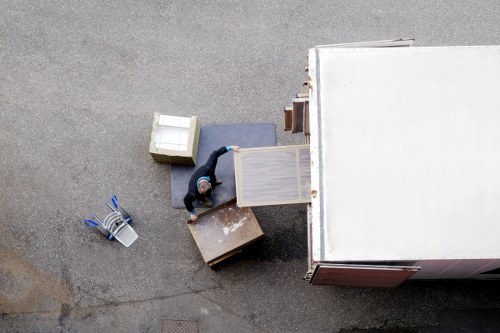
The exact service can vary, but most furniture pick-up solutions are built around making removal straightforward for the customer. In practical terms, the team comes to the property, assesses the items, and handles the lifting, loading, and transport. If needed, they may also assist with basic dismantling of items that cannot be removed in one piece.
Many customers appreciate that the service can be arranged for a single item, such as a sofa or bed frame, or for several pieces at once. That flexibility matters in Denmark, where people often live in compact apartments or efficiently designed homes and may only need one or two bulky items taken away at a time.
It is also common for furniture pick-up to be part of a broader clear-out. For example, a customer might have a wardrobe, mattress, coffee table, bookshelf, and a few chairs to remove in one visit. In a commercial setting, the pick-up may involve multiple matching items, such as office desks, task chairs, filing cabinets, and storage units.
Common items collected
Typical furniture items collected include:
- Sofas and armchairs
- Beds, mattresses, and bed frames
- Dining tables and chairs
- Wardrobes, dressers, and chests of drawers
- Office desks, ergonomic chairs, and cabinets
- Bookshelves, sideboards, and TV units
- Outdoor furniture, where access and condition allow
Some teams also handle mixed loads that combine furniture with other non-hazardous bulky items. If you have a special situation, it is best to request a quote and explain what needs to be removed so the service can be matched properly to the job.
How the Service Works

The process is usually simple and designed to reduce the effort required from the customer. While different providers may have different procedures, most furniture collection services follow a similar flow. You explain what needs to be picked up, where it is located, and any access details that matter. Based on that information, the team can plan the right vehicle, number of crew members, and time window for the visit.
On collection day, the team arrives, checks the items, and gets to work. If furniture needs to be moved from an upper floor, lifted from a basement, or taken down a narrow hallway, they will use the appropriate approach and equipment. The aim is to remove items safely while protecting walls, floors, and shared access areas as much as possible.
After collection, the furniture is transported away for the next step. Depending on its condition and local handling arrangements, that may mean reuse, donation, recycling, or disposal. For customers, the important part is that the items are out of the way and the space is ready for the next use.
A typical customer journey
- Make an enquiry with a description of the furniture and location.
- Receive a quote or price estimate based on the job details.
- Confirm the booking for a convenient date and time.
- Prepare access so the team can reach the furniture easily.
- Collection takes place with lifting, loading, and removal completed on site.
If you are unsure whether your furniture can be collected, it is worth asking before the booking. Most jobs become much easier to plan when the customer shares clear details about size, quantity, access, and any restrictions.
Residential Furniture Pick-Up Across Denmark

Private homes in Denmark come in many forms, and that variety affects how furniture pick-up is carried out. In cities such as Copenhagen, Aarhus, Aalborg, and Odense, many customers live in apartments where stair access, lift size, and parking availability can influence the collection plan. In suburban areas and smaller towns, homes may have better ground-floor access but still require careful removal through narrow doors, garages, or shared driveways.
Households often need pick-up after buying new furniture, redecorating a room, or clearing out old pieces that no longer suit their lifestyle. Parents may need nursery furniture removed, students may need help at the end of a lease, and homeowners may want larger items taken away after a renovation. In winter, when outdoor conditions can be difficult, having a local team handle the heavy lifting is especially practical.
Another common situation is the clearing of holiday homes and summer houses, which often contain older or mismatched pieces that are inconvenient to transport privately. These properties may be in coastal or rural areas, where access roads, seasonal use, and distance from the main city all influence logistics. A nearby furniture pick-up provider can help make the process less stressful and more efficient.
Residential property types we often see
- City apartments and walk-up flats
- Townhouses and terraced homes
- Detached houses and family homes
- Basement storage spaces and loft rooms
- Holiday homes and summer houses
- Rental properties at move-out stage
Tip: If furniture is in a basement, attic, or top-floor apartment, mention that when requesting a quote. That helps the team prepare for the access conditions and avoids surprises on the day.
Commercial Furniture Collection for Offices, Retail, and Hospitality

Businesses also rely on furniture pick-up services when they need space cleared quickly and with minimal disruption. Offices often replace desks, chairs, meeting tables, and storage systems as teams grow or layouts change. Retail spaces may need shelving, display units, counters, and backroom storage removed. Restaurants, cafés, hotels, and guest houses may need dining furniture, lounge seating, or reception items collected during refurbishments or seasonal updates.
In commercial settings, timing is often critical. The collection may need to happen after opening hours, during a renovation window, or on a date that fits a handover deadline. A local provider can work around access rules, loading bay availability, and building management requirements more easily than a company coming from far away. This is particularly useful in busy urban areas where parking and unloading time are limited.
For larger offices or multi-room premises, it can be helpful to arrange furniture pick-up in stages. That allows staff to keep working in some areas while other rooms are cleared. It can also support better planning when the furniture consists of mixed items, some reusable and some ready for disposal.
Commercial customers often ask for help with
- Office fit-outs and refits
- Workspace downsizing
- End-of-lease clearances
- Retail refurbishments
- Hospitality venue changes
- Storage room and archive furniture removal
For business customers, a reliable collection service supports smoother project timelines and helps minimise disruption to staff, clients, and tenants.
Why Choose a Local Team in Denmark?
Choosing a local provider for furniture pick-up in Denmark offers practical advantages that matter in everyday situations. Local teams are more likely to understand the realities of Danish buildings, transport access, and community rules. They know that some streets are tight, some blocks have limited parking, and some properties require advance notice for lift use or loading access.
This local understanding can make the entire process more efficient. It helps with route planning, timing, and handling items in a way that fits the property. If you live in a dense area like central Copenhagen or a busy district in Aarhus, local knowledge can be especially helpful because loading access may be limited and timing matters.
There is also a convenience factor. A nearby team can often respond faster, making it easier to book a collection at short notice or coordinate with a move, delivery, or refurbishment. For customers who want a quick solution without a lot of back-and-forth, that responsiveness is valuable.
Local knowledge helps with practical issues such as:
- Shared entrances and stairwells
- Lift booking or size limitations
- Resident parking zones and loading restrictions
- Building access rules and concierge procedures
- Weather considerations in winter or wet conditions
In short: a local company is often better placed to handle the everyday realities that come with removing bulky furniture in Danish towns and cities.
Areas Covered
Furniture collection services are commonly requested across a wide range of Danish locations. Depending on the provider, coverage may include major cities, surrounding suburbs, and nearby towns. Customers often enquire from central urban areas as well as smaller communities where access to transportation and disposal options may be less convenient.
Typical service areas may include Copenhagen and its surrounding districts, Aarhus, Odense, Aalborg, Esbjerg, Randers, Vejle, Horsens, Roskilde, Frederiksberg, and nearby local areas. Many providers also support requests from residential neighbourhoods, industrial parks, commercial centres, and holiday home regions, subject to travel distance and job size.
If you are located outside a major city, it is still worth asking. Furniture pick-up can often be arranged in nearby towns, commuter belts, and rural locations, provided the access and collection details are clear. The best approach is to request a quote and explain the item list, floor level, and any parking or loading considerations.
When location details matter most
- Busy city-centre addresses with limited curb access
- Apartment blocks with shared entrances or loading zones
- Detached homes with long driveways or garden access
- Commercial buildings with security or reception rules
- Seasonal properties in coastal or countryside areas
Pricing Factors to Expect
Every furniture pick-up job is different, so pricing is usually based on the details of the collection rather than a one-size-fits-all approach. The main factors typically include the type and amount of furniture, how easy it is to access, the number of people required to lift and load the items, and whether dismantling is needed before removal.
Distance and location can also play a role, especially for jobs outside the main service area or in locations that take longer to reach. If the collection involves a high floor without lift access, a basement with awkward entry, or multiple trips between the property and the vehicle, that can affect the estimate as well. Commercial bookings may have additional considerations if they must take place outside standard hours or within strict access windows.
The clearest way to understand likely cost is to share as much detail as possible when requesting a quote. Photos, item dimensions, floor level, and access notes can all help create a more accurate estimate. That way, the customer knows what to expect and the team can arrive prepared.
What can affect the final quote?
- Number of furniture items
- Size and weight of each item
- Need for dismantling or special handling
- Floor level and lift availability
- Parking distance from the property
- Collection time and location
- Mixed loads or additional bulky items
Clear information at the start usually means a smoother booking and fewer delays on the day.
How to Prepare for Furniture Pick-Up
Good preparation makes furniture pick-up easier and quicker. You do not need to do the heavy lifting yourself, but a little organisation before the team arrives can save time and help the collection go smoothly. This is especially true in homes with narrow hallways, staircases, or shared spaces, where access can become tight if smaller items are left in the way.
If possible, clear a path to the furniture and remove personal belongings from drawers, shelves, or storage compartments. Check whether the items need to be unplugged, detached from walls, or partially dismantled. If you are not sure what needs to be done, ask in advance so you can prepare correctly without taking on unnecessary work.
For customers in apartments or managed buildings, it may also help to check parking rules, lift reservations, or building access times before the collection day. Commercial clients should coordinate with site managers, reception staff, or facilities teams if special entry arrangements are needed.
Preparation checklist
- Identify all items to be collected
- Empty drawers, cupboards, and hidden storage
- Move small objects and loose accessories out of the way
- Check whether furniture needs dismantling
- Confirm floor level and access details
- Reserve parking or loading space if needed
- Tell the provider about gates, codes, or building rules
Useful reminder: if you have a tight deadline, mention it early so the booking can be planned with the right level of support.
What Makes a Furniture Pick-Up Service Worth Booking?
People usually arrange furniture pick-up because they want the job done safely, efficiently, and without making their day harder than it needs to be. Lifting heavy furniture is physically demanding and can lead to damage if items are dragged through hallways, turned awkwardly in stairwells, or carried without the right support. A professional service reduces those risks and takes the pressure off the customer.
Another major benefit is time. What might take you half a day, a full day, or even longer to organise on your own can often be handled far more smoothly by a team that knows the process. That is particularly helpful if you are juggling a move, a work schedule, family responsibilities, or a property deadline. Convenience, safety, and reliability are the main reasons customers choose this service.
There is also the question of responsible handling. Many customers prefer a service that can assess whether items are suitable for reuse, donation, recycling, or disposal. This helps avoid unnecessary waste and gives furniture a more suitable next step whenever possible. While exact arrangements depend on item condition and local handling options, the overall approach should be orderly and sensible.
Key benefits for customers
- Saves physical effort and reduces strain
- Helps with difficult access and heavy lifting
- Supports move-out and renovation deadlines
- Works for one item or many items
- Suitable for both homes and businesses
- Can be arranged to fit your schedule
Frequently Asked Questions
Can you collect just one item?
Yes, many customers book a pick-up for a single sofa, bed, wardrobe, or other bulky piece. A small job can still be worth arranging if the item is hard to move or transport privately.
Do I need to move the furniture outside first?
No. In most cases, the team should be able to collect the furniture from inside the property, provided access is safe and clearly described in advance.
What if the furniture needs dismantling?
Some items can be removed as they are, while others may need partial dismantling. It is best to mention this when requesting a quote so the team can prepare properly.
Can you help with office furniture?
Yes, furniture pick-up is often arranged for offices, shops, hospitality venues, and other commercial premises. This may include desks, chairs, tables, cabinets, and shelving.
Do you cover apartment buildings and high floors?
Yes, but access details matter. Floor level, lift availability, stair width, and parking conditions should all be shared in advance for an accurate booking.
What should I do with items I want to keep?
Move them well away from the collection area so they are not taken by mistake and the team has clear space to work.
Can I combine furniture pick-up with a larger clear-out?
Often yes. Many customers book furniture removal as part of a bigger property clearance, especially when moving, renovating, or emptying a premises.
For any unusual situation, it is always best to ask before the booking is confirmed. That helps ensure the right approach from the start.
Book Furniture Pick-Up When You Need a Practical Local Solution
If you are looking for a dependable way to remove bulky items without the hassle of doing it yourself, furniture pick-up in Denmark offers a practical solution for homes, offices, retail spaces, and other premises. Whether you need to clear a single room or handle a larger property change, a local service can make the process more manageable from start to finish.
Because Danish properties often come with access constraints, parking limitations, and a mix of modern and older building types, having a team that understands local conditions can make all the difference. It means the job is more likely to be handled efficiently, safely, and with less disruption to your day.
If you are ready to move forward, request a free quote or book your service now. Share what needs to be collected, where it is located, and any access details, and the next step can be arranged with confidence.
Contact us today to discuss your furniture collection needs and get the process underway.